
How to Remove Mugshots From Google Search Results in 2026
A mugshot on page one can feel like a digital scarlet letter. It can shape job offers, client trust, and even personal relationships long after a case ends.
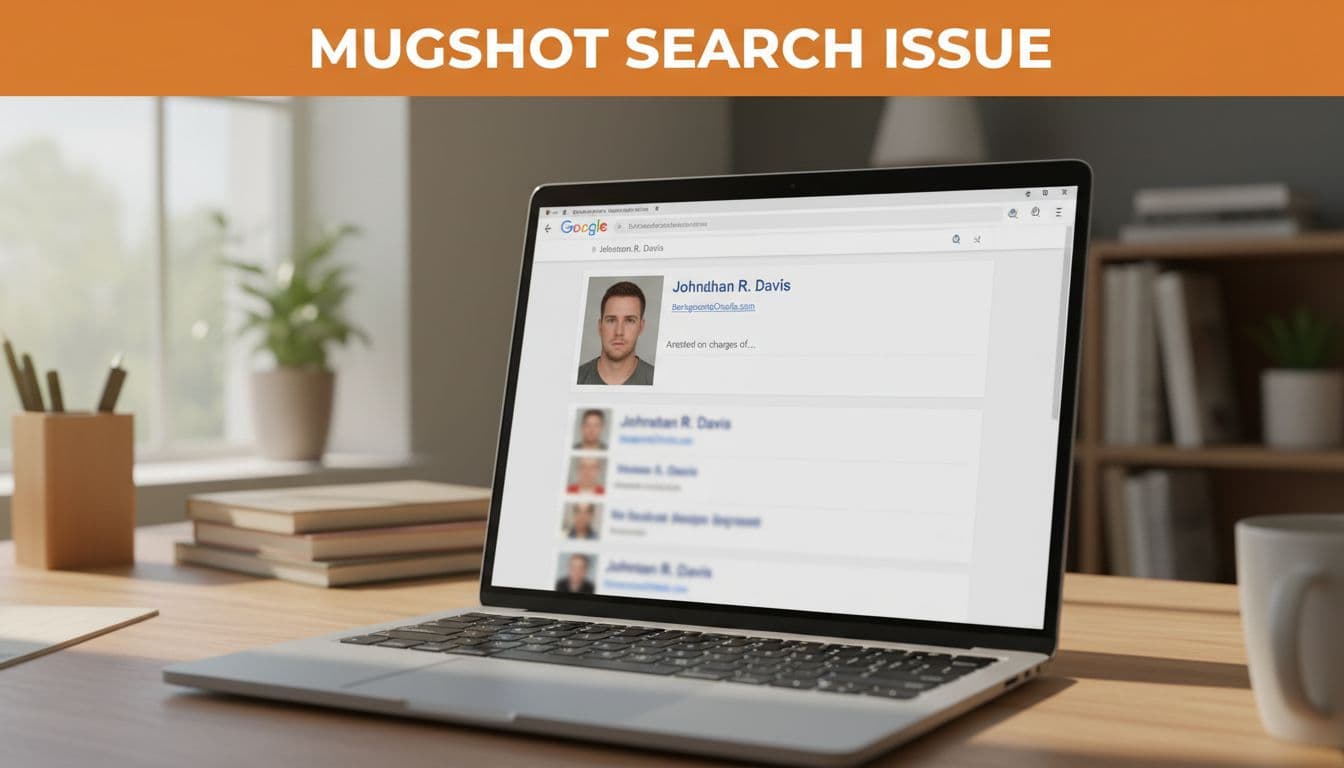
In 2026, the fix is still possible, but it usually takes more than one request. If you’re trying to remove mugshots google still shows, you need to separate the source website problem from the Google indexing problem.
That distinction is where most successful removal efforts start.
Start with the real target, the source site or Google
Google doesn’t host most mugshots. It indexes pages and images that live somewhere else. Think of Google as a map, not the building.
That means a mugshot result can disappear in two different ways. First, the original page gets removed or blocked. Second, Google drops the listing after it re-crawls the page, or after you submit the right request.
Here’s the quick difference:
| Goal | Who controls it | What usually works |
|---|---|---|
| Remove the mugshot page from the web | The mugshot site or publisher | State-law request, dismissal or expungement proof, direct legal demand |
| Remove the result from Google Search | Outdated content request, policy complaint, re-crawl after noindex, 404, or 410 |
Removing the page from the source is usually the hard part. Removing Google’s stale copy is the cleanup step.
If the site owner deletes the page, adds a noindex tag, or returns a 404 or 410 status, Google will often deindex it after a fresh crawl. If the page stays live and indexable, Google usually keeps showing it.
In the U.S., Google does not offer a broad right to be forgotten for public arrest records. So embarrassment alone rarely gets a lawful mugshot removed from search. That’s why source-first tactics matter. For more detailed, source-side tactics, see these practical mugshot removal strategies.
When Google may remove mugshot results, and what proof helps
Google may act in a few narrow situations. One common case is a stale result. If the mugshot page is already gone, but Google still shows it, the outdated content process can often clear the listing in a day or two.
Google may also delist pages from sites that charge money to remove mugshots. That matters because many states now restrict or ban pay-to-remove practices. As of 2026, rules in places like Georgia and Oregon can force removal on tight timelines when charges were dropped, the case was not prosecuted, or the record was expunged.
Helpful evidence usually includes:
- Court paperwork showing dismissal, acquittal, sealing, or expungement
- Screenshots of the search result and the source page
- Proof of your request to the source site, including emails or certified mail
- Evidence of a removal fee demand, if the site wants payment
If the page is still live, Google may refuse removal unless the site breaks a policy or law. That’s frustrating, but it’s normal. A public record page that remains online can stay indexed.
For a consumer-focused overview, Security.org’s mugshot removal guide is a useful reference. If you’re dealing with a mugshot website directly, this legal overview of mugshot website removal explains why state law and court records often matter more than a generic email request.
If the source site refuses removal, switch to suppression
When a mugshot site won’t budge, your options shift. You may need a lawyer, a state complaint, or a stronger documentation trail. If the site operates in a state that bans fee-based removals, report it to the right state authority or attorney general.
At that point, online reputation management becomes practical, not cosmetic. In 2026, search results are more than ten blue links. Google can show image packs, AI Overviews, news cards, and entity panels. That means one old booking photo can keep resurfacing unless your name has stronger, fresher signals around it.
The answer is controlled, high-trust content. Build a personal site, refresh LinkedIn and professional profiles, publish accurate bios, add press-worthy updates, and strengthen pages you control. If court-related pages also show up, this guide on how to suppress court records in Google helps explain the broader cleanup process. For long-term recovery, these online reputation repair services show how suppression fits into a wider strategy.
A solid reputation management plan also means asking hard questions before hiring help. A good reputation management company should explain source removal, Google deindexing, and suppression as separate tracks. The better online reputation management companies don’t promise magic. They combine legal outreach, SEO, and online reputation repair over time. A credible Reputation Repair Company or Online Reputation Expert should be honest about limits, timelines, and risk. Real Reputation Repair Services focus on durable first-page improvement, not empty guarantees.
This is informational content, not legal advice. Still, one point is clear: if you can remove the mugshot at the source, do that first. Then clear Google’s copy. If removal fails, build enough trusted content that one old image no longer defines your name.
Start by saving screenshots, gathering court records, and documenting every request today. Speed matters, because the longer a mugshot sits in search, the harder it can be to outrank later.

Recognized for Growth.
Relentless for Our Clients.
We're proud to be named to the 2025 Inc. 5000 list, ranking Reputation Rhino among America's fastest-growing private companies. This recognition places us in the elite 0.07% of all privately held businesses an achievement that reflects our innovative approach and the enduring trust of our clients.
From high-net-worth individuals to Fortune 500 companies, our clients trust us to protect what matters most their reputations. This honor reflects the impact of that work and the world-class talent driving it forward.
You won't find cookie-cutter solutions here, just real results built by the best in the business.
Your reputation is your most valuable asset. Trust it to the proven leaders.

Reputation Rhino is an award-winning online reputation management company helping individuals and companies of all sizes to build, protect, and repair their online image.


Reputation Management Services
Reputation Management Resources
About Us
Contact Information
Corporate Headquarters
442 5th Ave #1075
New York, NY 10018
888.975.3331
info@reputationrhino.com
Florida Office
28210 Paseo Drive
#190-123
Wesley Chapel, FL 33543
© Copyright ReputationRhino.com. All Rights Reserved