
Google Review Policy Update in April 2026: What Changed
Google’s April 2026 google review policy update is small on the page and big in practice. Leveraging Gemini AI technology, it puts more pressure on review requests that look scripted, rewarded, or pushed at the point of service.
For local businesses managing their Google Business Profile, that means old habits like checkout kiosks, staff quotas, and gift-card offers are now harder to defend. If reviews drive your local SEO and sales, this update matters right away.
The safest response is simple, cleaner review management, clearer staff training, and fewer tricks that blur the line between feedback and promotion. That shift is where the real work starts.
Key Takeaways
- Google’s April 2026 review policy update uses Gemini AI to target scripted, rewarded, or pressured reviews, including staff quotas and requests for specific mentions.
- Risky habits like on-site asks, incentives, and review gating can lead to filtered reviews, warnings, or profile suspensions that hurt local SEO and trust.
- Safer practices include off-site follow-ups, open-ended language for honest feedback, no rewards, and staff training to avoid manipulation flags.
- Audit email/SMS templates, timing, and vendors now to keep your Google Business Profile compliant and authentic.
- Honest, customer-led reviews build stronger reputations without tricks, aligning with Google’s focus on patterns over volume.
What changed in Google’s April 2026 review policy
Google updated its Google Maps Rating Manipulation policy in mid-April, and the new wording is aimed at reviews that look manufactured. Google’s own Maps protection update says the company is sharpening its systems to catch bad actors, scams, and suspicious review spikes on Google Maps.
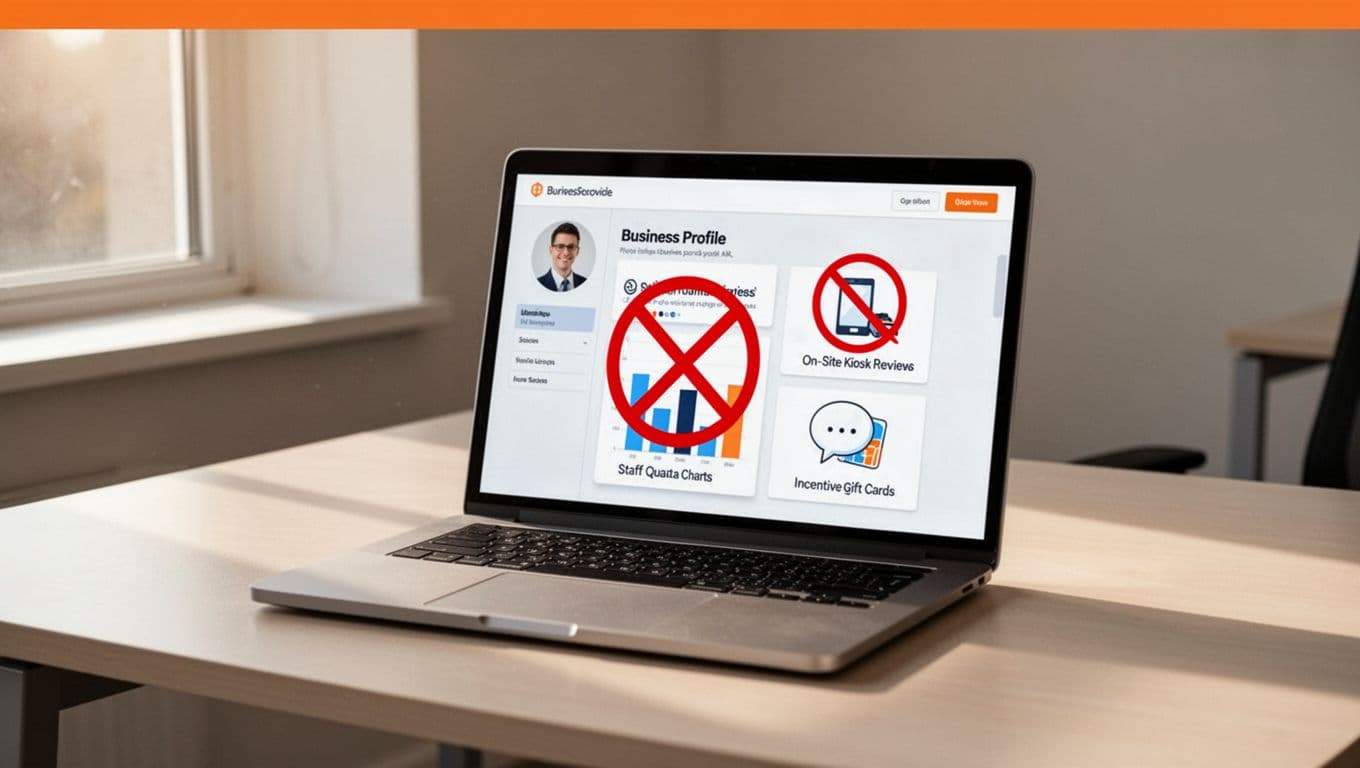
In plain English, Google is drawing a clearer line around pressure. Two practices now stand out more clearly: asking staff to collect staff review quotas, and asking for reviews that mention specific people or specific content.
That matters because it changes the way businesses think about review generation. A request like “share your experience” is one thing. A request like “mention Sarah by name and say how fast she helped you” is another.
Google is also doing this in a broader context. According to its Trust and Safety Report, the company blocked 292 million fake reviews in 2025, and it is using more automated systems to find patterns before fake reviews go live. A useful industry recap from Search Engine Roundtable tracks how quickly local SEO teams spotted the April changes.
One detail still matters, though. Google has not explained every trigger in public, so enforcement can still depend on timing, repetition, and context. As of May 2026, some cases are still being interpreted through the policy language rather than a full rulebook.
Why the update matters for local businesses
For a local business, review policy is not a side issue. It affects trust, click-through rates, and how full your Google Business Profile looks next to a competitor’s.
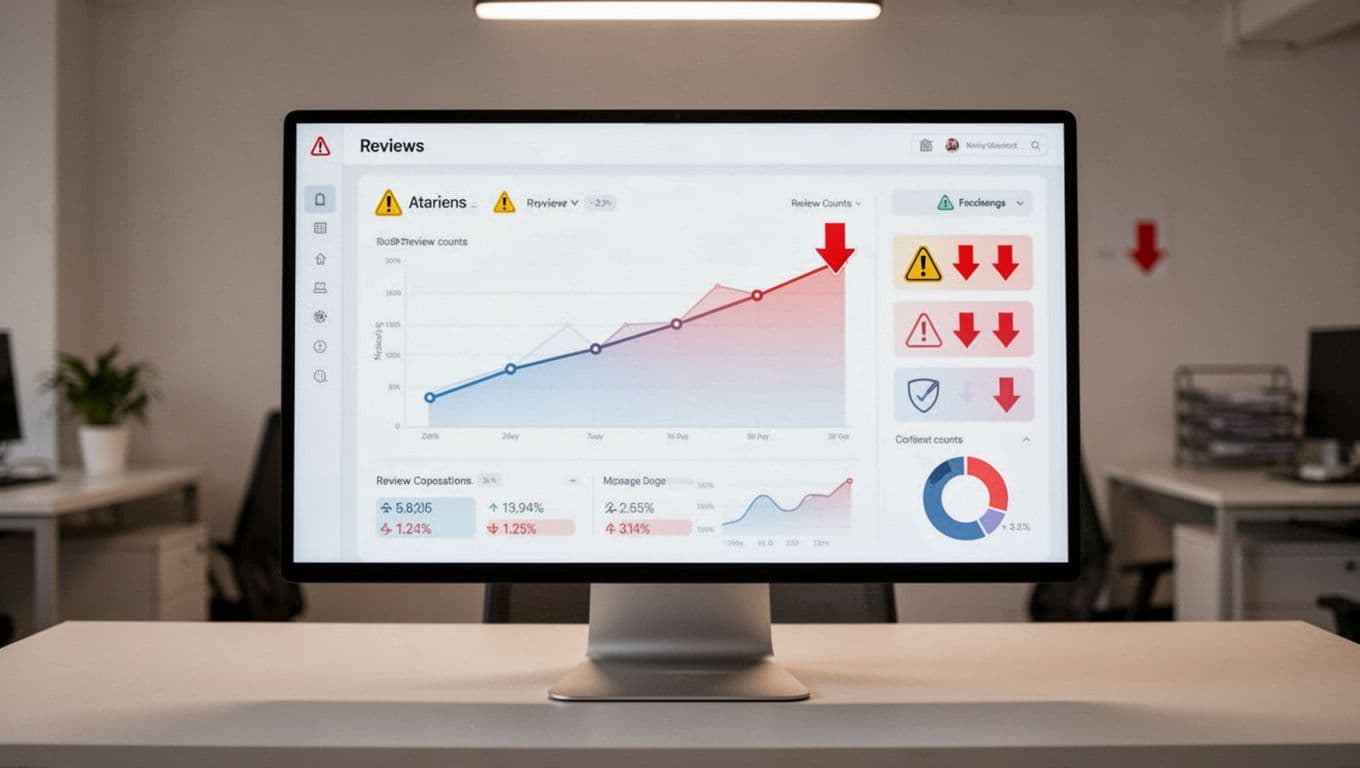
If a batch of reviews lands right after checkout, if staff are coached to ask for names, or if a reward shows up in the process, Google may treat that activity as fake engagement or prohibited content. The result can be filtered reviews, fewer visible ratings, a warning banner, profile suspension, or a Google Business Profile that looks less active than it should.
That is why this update reaches beyond marketing. It touches reputation management, customer service, and operations at the same time. If your team already needs a step-by-step online reputation repair guide, this is a good moment to separate policy fixes from cleanup work.
The impact is not the same for every business. A restaurant may get a natural burst of feedback after a busy night. Multi-location businesses and home services brands may see reviews spread across several days. Google can still read both patterns, but pressure tactics and repeated scripts make a profile look artificial.
The safer your process looks to a customer, the safer it usually looks to Google.
That is where many teams get caught off guard. They think only fake reviews are at risk, but a messy request process can hurt real reviews too. A reputation management company that understands Google policy should tell you that before selling you more volume.
How to ask for reviews without tripping policy
The good news is that compliant review solicitation is not hard. It is usually just less pushy.
Here is a quick comparison of risky habits and safer alternatives.
| Risky request | Safer alternative |
|---|---|
| Practice review gating (only asking satisfied customers) | Ask every customer for honest customer feedback |
| Request reviews at checkout or on-site | Send a follow-up text or email later |
| Ask customers to mention a staff member by name | Keep the request open-ended |
| Offer a discount, gift card, or prize for incentivized reviews | Say thank you with no reward attached |
The safest ask sounds plain. It invites feedback and leaves the wording to the customer.
A helpful rule is to avoid scripting the review itself. If the request tells people what to say, who to mention, or how many stars to leave, it is too close to manipulation.

Use these steps to keep your process clean:
- Move the ask off-site Send review requests by email or text after the visit, not at the counter.
- Keep the language open Ask for honest feedback, not for a staff name, product name, or scripted phrase.
- Remove rewards Do not offer discounts, gifts, or contests in exchange for reviews.
- Train the front line Make sure employees know what they can say, and what they should never say.
A good Online Reputation Expert will also review your templates for policy-safe wording. The best online reputation management companies do not just chase ratings, they build systems that stay within the rules. A Review Management Tool can help automate these safe processes. If you are comparing a Reputation Repair Company or Reputation Repair Services, ask how they handle staff training, review timing, and approval of every request.
A quick compliance check for your team
As the Business Profile owner, start with the places where review requests happen most often. That usually means email templates, SMS messages, front-desk scripts, and any QR codes near checkout. Begin by auditing review templates in these spots.
Then review the words themselves. Remove any line that asks for a specific person’s name, a fixed star rating, or a certain number of reviews. Also remove anything that sounds like a condition, such as “leave a review and get…” because Google has little patience for incentives, which can trigger review removal.
Next, look at your timing. A same-minute review push after a visit can look forced, especially if many requests go out at once. A short delay and a steady pace usually look more natural.
Finally, check your vendors. If a reputation management company is sending review requests on your behalf, ask to see the exact copy. If they cannot explain how their process fits Google policy, or show scam detection against review extortion scams, that is a warning sign.
This is also where online reputation repair fits into the bigger picture. If your profile has already been hit by filters or bad habits, you may need cleanup work before growth work, especially to support verified profiles and build overall trust. In that case, this 48-hour reputation crisis plan is a useful starting point for getting your team aligned.
A short audit like this can save a lot of grief later, help you avoid email alerts from Google, and keep your review engine honest, which matters more now that Google is watching for patterns instead of counting stars alone.
Frequently Asked Questions
What changed in Google’s April 2026 review policy?
Google sharpened its Maps Rating Manipulation policy to catch manufactured reviews more effectively with AI. Key targets now include staff review quotas and requests mentioning specific people or content. This builds on blocking 292 million fakes in 2025 by spotting pressure patterns early.
Why does this update matter for local businesses?
Reviews drive trust, rankings, and sales, but violations can filter real feedback or suspend profiles. Pressure tactics make genuine reviews look suspicious, thinning your visible ratings next to competitors. It forces a shift from volume tricks to clean reputation management.
How can I ask for reviews without violating policy?
Send open-ended requests like “share your experience” via email or text after the visit, not on-site. Skip rewards, staff names, or scripting to keep it honest. Train teams on safe phrasing to avoid AI flags.
What should I check in a compliance audit?
Review templates for incentives, specifics, or quotas in emails, SMS, QR codes, and scripts. Check timing to avoid same-minute bursts and vet vendors’ copy against policy. Fix issues fast to prevent Google alerts or filters.
What are the risks of non-compliance?
Google may filter reviews, add warning banners, or suspend profiles, making you look less active. Real feedback can get caught in pattern-based removals from past habits. Cleanup requires separating fixes from growth, often needing expert reputation repair.
Conclusion
The April 2026 Google review policy update is less about surprise and more about clearer rules. If your process depends on pressure, quotas, or incentives that create a conflict of interest, it needs a reset.
Businesses that ask for honest feedback, send requests off-site, and train staff well are in a stronger position. That approach supports online reputation management without putting your Google Business Profile at risk.
The safest habit is still the simplest one. Ask for real feedback, then let customers write the review in their own words as authentic User Generated Content.

Recognized for Growth.
Relentless for Our Clients.
We're proud to be named to the 2025 Inc. 5000 list, ranking Reputation Rhino among America's fastest-growing private companies. This recognition places us in the elite 0.07% of all privately held businesses an achievement that reflects our innovative approach and the enduring trust of our clients.
From high-net-worth individuals to Fortune 500 companies, our clients trust us to protect what matters most their reputations. This honor reflects the impact of that work and the world-class talent driving it forward.
You won't find cookie-cutter solutions here, just real results built by the best in the business.
Your reputation is your most valuable asset. Trust it to the proven leaders.

Reputation Rhino is an award-winning online reputation management company helping individuals and companies of all sizes to build, protect, and repair their online image.


Reputation Management Services
Reputation Management Resources
About Us
Contact Information
Corporate Headquarters
442 5th Ave #1075
New York, NY 10018
888.975.3331
info@reputationrhino.com
Florida Office
28210 Paseo Drive
#190-123
Wesley Chapel, FL 33543
© Copyright ReputationRhino.com. All Rights Reserved