
Google Review Filtering Changed in May 2026: What Businesses Need to Know
Google review filtering is getting stricter for Google Business Profiles, and the effects can be hard to spot at first. Some businesses are losing reviews that looked legitimate, while spam gets removed faster and in bigger batches. That can change your Google Maps listing, how clients read your rating, and how your team explains a sudden drop.
For local businesses and agencies focused on local SEO, this is more than a cleanup issue. It affects visibility, trust, and the way you build demand. The safest response is to separate what Google has confirmed from what people are seeing in the field.
Key Takeaways
- Google’s May 2026 review filtering update is stricter and faster, targeting suspicious patterns like review spikes preemptively to combat spam, fake reviews, and manipulation.
- Legitimate reviews can vanish alongside spam due to broad automated filters, impacting Google Business Profile ratings, local SEO prominence, and customer trust.
- Focus on steady, authentic review collection without incentives, quotas, or scripted wording to maintain a natural profile and avoid triggering filters.
- Monitor profiles weekly with screenshots, audit campaigns for policy violations, and communicate transparently to separate filtering from service issues.
- Detailed reviews, owner replies, and consistent growth across locations boost local pack rankings more reliably than volume spikes.
What Google has confirmed about review filtering
Google has said it is pushing harder against fake reviews, spam reviews, extortion attempts, and scam patterns on Maps. Its update on new ways Google is protecting businesses on Maps explains that suspicious review spikes can trigger fast removals through automated systems, the spam detection system, and even temporary pauses on new contributions.
That matters because the platform is no longer only removing obvious spam after the fact. In some cases, it is stopping review abuse before it lands on a profile. Google has also sharpened its policy language around incentives, pressure, and review manipulation. That means a review campaign can fail even when the intent was harmless.
The cleanest way to think about this shift is simple. Google is trying to trust the pattern, not just the star rating.
| Signal | What it can mean | Smart response |
|---|---|---|
| A sudden burst of reviews disappears | Google may have flagged the pattern as suspicious | Audit the timing, source, and wording for review removal |
| Reviews arrive with gifts or discounts tied to them | The asks likely crossed policy lines | Address policy violations; remove incentives from the process |
| Review volume slows after a campaign | The profile may look less natural | Return to steady, post-service requests |
| Legit reviews vanish with spam | The filter may have been too broad | Document the loss and watch for recovery |
The main point is clear. Google review filtering is now tied more tightly to trust signals, not just fraud detection.
Why local SEO is feeling the pressure
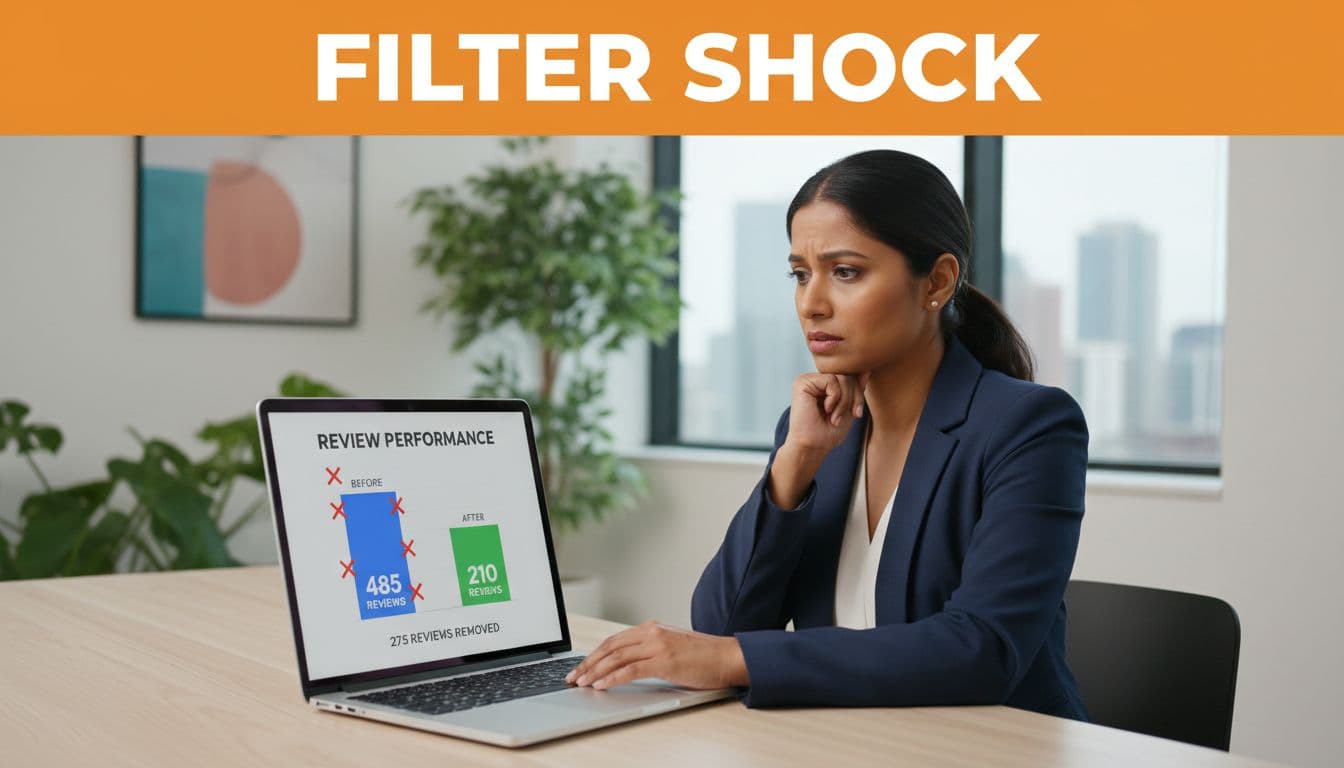
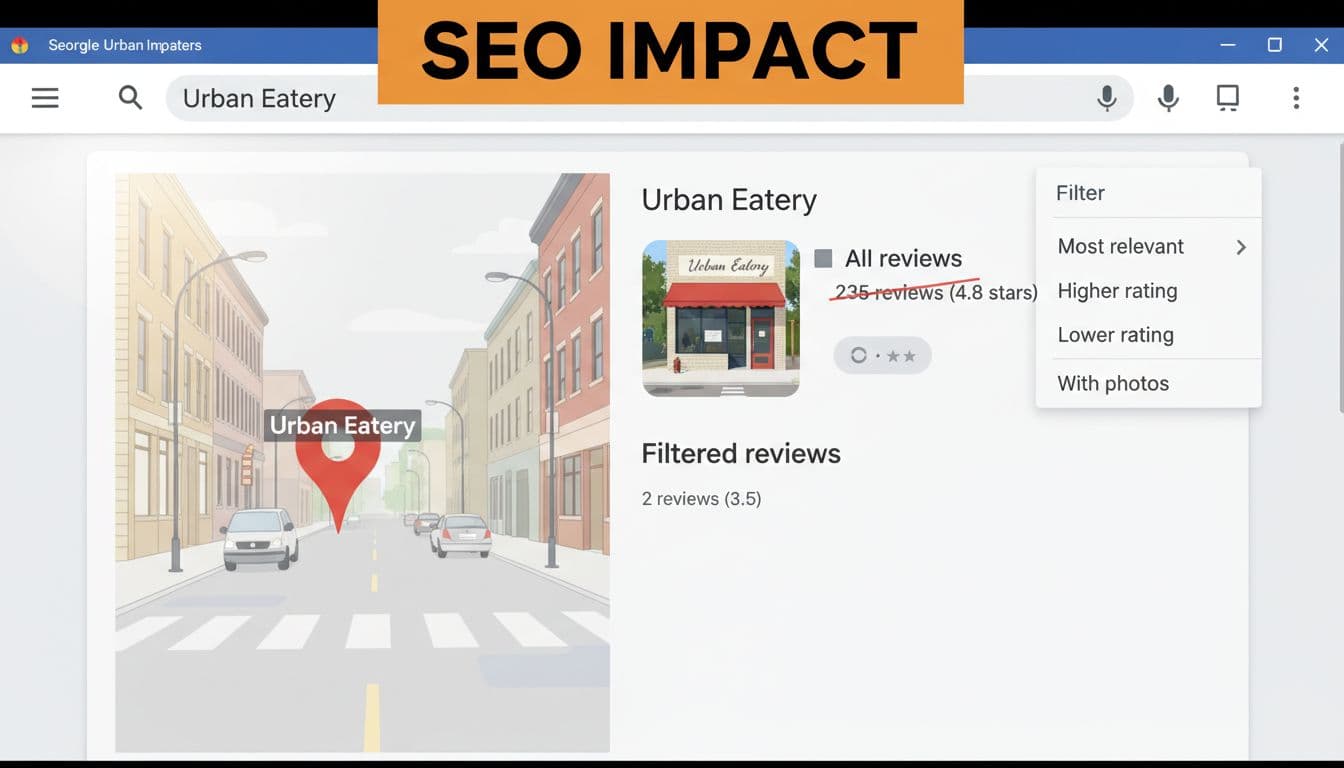
Review filtering hits local SEO because reviews do more than add social proof. They help shape prominence, freshness, and click behavior, with customer feedback and even negative reviews influencing the Google rating. When review counts fall or growth stalls, the profile can look less active, even if the business is busy.
That matters in the local pack. A business with a strong website can still lose ground if its reviews look thin, stale, or uneven compared with nearby competitors. A profile with 200 reviews from two years ago does not feel as current as one with steady recent feedback and consistent five-star ratings. Google reacts to that pattern.
Review text also matters more than many teams expect. A detailed review that mentions the service, product, or visit type can help a profile match search intent better and perform well in search results than a vague “great service” note. Owner replies matter too, because they show the business is active and paying attention.
SearchLab Digital’s 2026 review guidelines update is a useful reference for the tighter rules around pressure, wording, and unusual review patterns. The message is not that reviews stopped working. The message is that sloppy review programs are easier to spot.
The practical takeaway is direct. If your review strategy depends on spikes, scripts, or one-time pushes, your local search rankings can wobble fast. If it depends on steady, real customer feedback, it is much safer.
How to spot review losses before they hurt trust
The first warning sign is usually not a ranking drop. It is missing reviews that make a profile look thinner than it did a week ago. That is why review tracking needs to be more disciplined now.
Start with the basics. Compare review totals weekly, not only at month end. Save screenshots of major changes. Track the date of the last review before and after any campaign. If a sudden loss of missing reviews lines up with a burst of new ones, Google may have filtered the batch, perhaps due to IP address clusters or duplicate content.
A simple monitoring routine helps separate platform behavior from customer feedback issues:
- Check total reviews and star averages once a week on your Google Business Profile.
- Log any review loss by date and location.
- Compare your newest reviews with top local competitors.
- Note whether replies, photos, or detailed comments disappear too.
- Tell clients or stakeholders what you know, and what you do not know yet.
That last point matters a lot for agencies. A client who sees missing reviews often assumes something went wrong with service or service recovery. Sometimes that is true. Sometimes Google filtered a set of reviews without warning. Clear communication keeps the conversation grounded.
If you need a policy reference for internal reporting, SOCi’s explanation of Google’s rating manipulation policy is a good one to keep handy. It helps show why incentives, selective asks, and pressure tactics are risky even when the business thinks they are harmless.
How to keep getting reviews without crossing the line
The answer is not to stop asking. The answer is to ask in a cleaner way.
Google’s current stance, as summarized in Yext’s April 2026 review rule update, makes the boundary easier to see. You can ask for honest feedback on your Google Business Profile. You should not require a review quota, push for specific wording, ask customers to mention a staff member by name, or create incentivized reviews.
That is where online reputation management and review collection overlap. A good process feels ordinary. It does not try to steer the review into review request automation.
For teams that need outside help, a reputation management company should build systems, not shortcuts. The same is true for online reputation management companies that claim they can grow reviews fast. A strong Online Reputation Expert will look at timing, post-sale follow-up, and response templates before anything else. If you need online reputation repair, the first step is usually a policy-safe cleanup plan with private feedback for dissatisfied customers, not a louder campaign. Reputation Repair Services should support better feedback flow, not pressure. And if a Reputation Repair Company promises results without showing how it stays inside Google’s rules, that is a warning sign.
This is also where location-level operations matter. Receipt links, post-service emails, SMS follow-ups, and QR codes all work better when they are simple. Ask for genuine experiences. Do not ask for a perfect script.

One more point for multi-location brands, agencies, and franchise teams. If you are using review management software, make sure the workflow is consistent across every location. Different store managers should not invent their own ask. That is how one compliant process turns into ten risky ones. Aim for authentic reviews every time.
What to do now
The fastest response is to tighten your process to maintain a natural review profile before the next review shift hits.
- Audit the last 90 days of review gains and losses in your Google Business Profile, using sentiment analysis to gauge trends.
- Remove any incentive, quota, or wording requirement.
- Standardize one compliant ask for all locations.
- Prepare a short explanation for clients, staff, and leadership.
- Watch for repeat losses so you can separate filtering from real service problems.
If your profile is already losing reviews, treat it as a trust issue and a process issue at the same time. That keeps the response useful instead of emotional.
Frequently Asked Questions
Why are legitimate reviews disappearing from my Google Business Profile?
Google’s updated filtering system removes batches of reviews based on patterns like sudden spikes or IP clusters, even if some are genuine. This proactive approach aims to stop spam before it appears but can catch real feedback in broad sweeps. Track losses weekly and document them to explain to clients without assuming service failures.
How can I ask for reviews without crossing Google’s policy lines?
Request honest feedback via simple post-service emails, SMS, or QR codes without incentives, quotas, specific wording, or pressure. Standardize the process across locations for consistency and focus on genuine experiences. This builds a natural flow that resists filtering while supporting local SEO.
What should I do if my review count drops suddenly after a campaign?
Audit the timing, sources, and content of recent reviews for suspicious patterns like bursts or duplicates. Remove any incentives from your process and shift to steady requests. Prepare a clear explanation for stakeholders, monitoring for recovery as Google’s filters settle.
How does review filtering impact local SEO rankings?
Fewer or stale reviews make profiles look less active and trustworthy, hurting prominence in the local pack compared to competitors with fresh, detailed feedback. Owner replies and rich review text help match search intent better. Prioritize quality and consistency over volume to hold ground.
What’s the best monitoring routine for review filtering?
Check total reviews, averages, and changes weekly, saving screenshots and logging losses by date. Compare with competitors and note if photos or replies vanish too. Use this data to refine compliant strategies and communicate platform behavior accurately.
Conclusion
Google’s review filtration system in May 2026 is stricter, faster, and less forgiving of patterns that look engineered by its spam detection system. That creates real pain when legitimate reviews disappear, but it also rewards businesses that collect authentic reviews the right way.
The strongest move now is steady, compliant review growth paired with clear tracking to earn five-star ratings naturally. If your process is clean, your Google Business Profile has a much better chance of holding its ground as Google keeps tightening the filter.

Recognized for Growth.
Relentless for Our Clients.
We're proud to be named to the 2025 Inc. 5000 list, ranking Reputation Rhino among America's fastest-growing private companies. This recognition places us in the elite 0.07% of all privately held businesses an achievement that reflects our innovative approach and the enduring trust of our clients.
From high-net-worth individuals to Fortune 500 companies, our clients trust us to protect what matters most their reputations. This honor reflects the impact of that work and the world-class talent driving it forward.
You won't find cookie-cutter solutions here, just real results built by the best in the business.
Your reputation is your most valuable asset. Trust it to the proven leaders.

Reputation Rhino is an award-winning online reputation management company helping individuals and companies of all sizes to build, protect, and repair their online image.


Reputation Management Services
Reputation Management Resources
About Us
Contact Information
Corporate Headquarters
442 5th Ave #1075
New York, NY 10018
888.975.3331
info@reputationrhino.com
Florida Office
28210 Paseo Drive
#190-123
Wesley Chapel, FL 33543
© Copyright ReputationRhino.com. All Rights Reserved